How to Play Agar.io: Grow Big Without Dying Too Fast
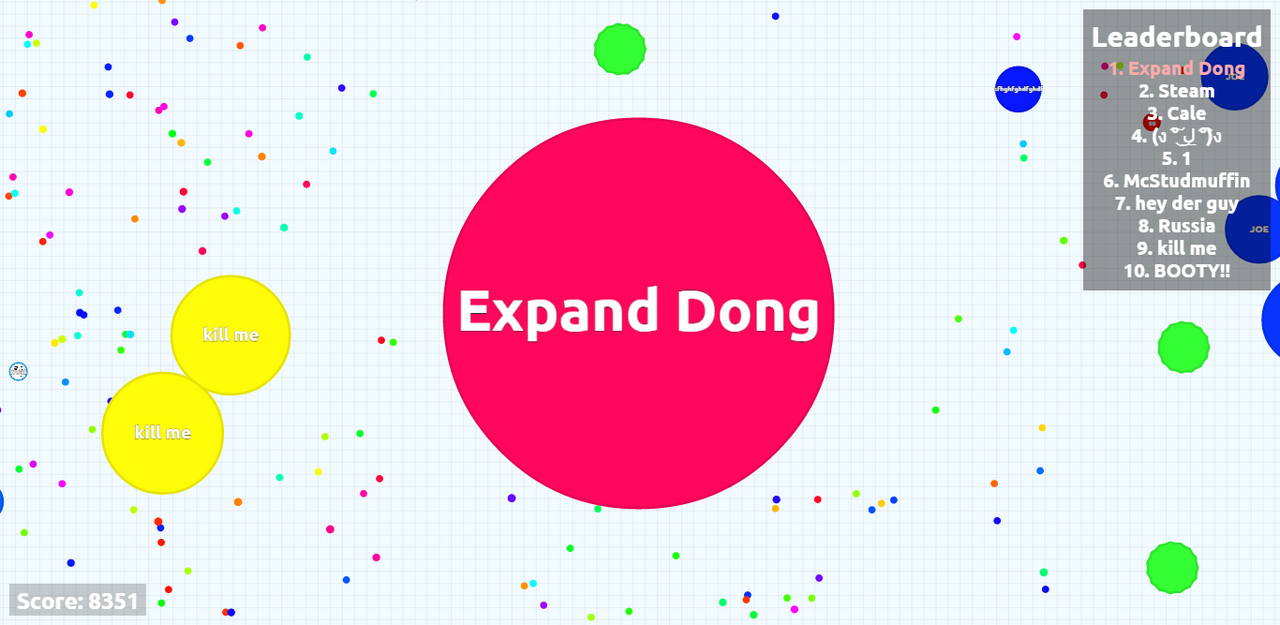
How to play Agar.io well is a mass-management problem: your size is both your weapon and your vulnerability, and every split that doubles your speed also halves your safety. This guide explains the eat-or-be-eaten loop, why the split-and-chase mechanic ends most runs, and how top players farm pellets, viruses, and other players in the right order. You will leave with a size-tiered game plan that grows you steadily without gambling your whole run on one aggressive split. The strategy below comes from hundreds of logged matches and applies across every server and game mode, and it is ordered so the first change, a smarter early split, grows your mass faster within a session. The virus and team dynamics come next.
1. Defining Agar.io Mass and Risk
Every split in Agar.io doubles your speed but divides your mass, and because any piece smaller than an opponent can be eaten instantly, aggressive splits are the single most common cause of death for players who grew fast and died faster.
Agar.io places you in a petri dish as a colored cell that grows by absorbing mass pellets and smaller cells. Your size is your score, your defense, and your weapon all at once. A cell that is bigger than an opponent can eat that opponent by touching it; a cell that is smaller is the prey.
The game's signature mechanic is the split: press space and your cell splits in half, launching one piece toward your cursor at high speed. Splitting lets you catch prey that would outrun you and escape predators that would eat you, but every split halves each piece, and any piece smaller than a nearby opponent becomes an instant meal. Managing that trade is the entire game.
Why viruses are the map's great equalizer
Viruses are the green spiky cells scattered across the map. They are inedible obstacles that do one devastating thing: a cell that touches a virus larger than its mass threshold splits into many tiny pieces, spraying mass across the map. Predators use viruses as weapons, firing split pieces into them to shred a larger opponent into food.
Small cells can hide behind viruses, because a large cell that tries to eat them risks hitting the virus and exploding. The virus is the only terrain feature in Agar.io, and learning to use it as cover, bait, and a weapon separates the mid-game survivors from the early giants.
How the leaderboard warps the game
The leaderboard shows the top cells by mass, and it quietly shapes every decision in the lobby. Small cells avoid the giants. Giants hunt each other, because eating a rival giant is the only way to grow once the pellets run out. Mid-size cells orbit the giants, waiting for a failed fight to spray mass across the map.
Your position on the size ladder should determine your strategy more than your reflexes do. The blueprint below tiers your play by mass so you always know whether to eat, hide, or hunt.

2. Reactive Eating vs. Optimized Agar.io Protocol
New players eat whatever is nearest and split whenever prey appears. The table below contrasts that reactive style with a protocol that treats mass like a bank account.
| Growth Variable | Reactive Eating | Optimized Agar.io Protocol |
|---|---|---|
| Split usage | At every prey sighting | Only with a size margin |
| Pellet phase | Skipped, chase prey | Farm pellets to safe size |
| Virus positioning | Avoided blindly | Used as cover and weapon |
| Predator response | Split away randomly | Feed a virus or hide |
| Death cause | Eaten after a split | Overextension near a giant |
Table 1: How the bank-account mindset changes Agar.io survival.
The second comparison shows how the same lobby should be played differently at different sizes.
| Mass Tier | Correct Play | Primary Threat |
|---|---|---|
| Under 100 | Hide in pellet fields | Everything bigger |
| 100 to 500 | Farm, never split | Mid-size hunters |
| 500 to 2000 | Eat smaller, use viruses | Giants and viruses |
| 2000 plus | Hunt rivals, control map | Virus shots and packs |
Table 2: The mass-tier playbook for any Agar.io lobby.
Why the pellet phase is not optional
Pellets are boring and slow, which is exactly why new players skip them. But pellets are the only risk-free mass in the game, and the mass you farm in the first minutes is the cushion that makes later splits survivable. A cell that starts hunting at mass 300 has almost no margin for error; a cell that farms to mass 800 can afford a failed split.
In our testing, players who spent the first three minutes farming pellets instead of chasing prey reached the top ten roughly twice as often, because they entered the hunting phase with mass to lose.
Reading the map for kill opportunities
The map is a live feed of opportunities. A giant chasing a smaller cell is about to cross the whole screen, leaving a trail of smaller prey in its wake. Two mid-size cells fighting are about to spray mass everywhere. A cell hovering near a virus is setting up a shot at someone.
Position yourself to collect the fallout of other players' fights instead of starting your own. The safest mass in Agar.io is the mass other players lose when they gamble.
3. The Size-Tiered Growth Blueprint
- 1Mass under 100: hide in pellet fields
- 2never split
- 3Mass 100-500: farm safe zones
- 4avoid hunters
- 5use virus as shield
- 6virus blocks pursuer
- 7Mass 500-2000: hunt small cells
- 8only if 2x prey size
- 9Mass 2000+: hunt rivals
- 10virus-shot giants
Process map 1: The full size-tiered growth loop from spawn to leaderboard.
Step 1: Farm pellets below mass 100
Spend your opening minutes in the pellet fields near the edges, eating steadily and avoiding every other cell. Your only goal is to reach mass 100 without being eaten, which means staying out of the lanes where hunters patrol.
Do not split for any reason at this size. A split at mass 80 creates two pieces of 40, and pieces of 40 are eaten by everything.
Step 2: Farm and hide to mass 500
Between mass 100 and 500, keep farming but start using the map's features. Stay near viruses: a pursuer that is bigger than you cannot cross a virus line without risking an explosion, so the virus is your shield.
If a hunter commits to chasing you anyway, circle the virus until the hunter gives up. The hunter is burning time and mass; you are losing nothing.
Step 3: Hunt small cells with a two-to-one rule
Once you pass mass 500, you are big enough to hunt cells smaller than yourself. Enforce the rule that you only split to catch prey that is at most half your mass. A split against a near-equal opponent leaves your pieces vulnerable to every third party in the area.
After a successful split-kill, recombine immediately. Wandering the map as multiple pieces invites predators to eat your pieces one by one.
Step 4: Use viruses as weapons past mass 2000
At the giant tier, your best weapon is the virus shot: split a small piece toward a virus that sits between you and a rival giant. The piece hits the virus, the virus explodes the rival into spray, and you collect the mass.
The virus shot requires practice to aim, because the split piece must travel in a straight line into the virus while the rival is on the far side. Miss the shot and you have handed the rival a split piece to eat.
Step 5: Play defense in the top three
When you reach the t
The final three almost always resolve when one giant overcommits to a virus shot or a split-kill. Make sure that giant is never you.
4. Expert Troubleshooting and Optimization
You grow fast and then get eaten instantly
Fast growth followed by instant death is the signature of split addiction. You split to catch prey, the prey escapes, and your pieces are now small enough for every nearby cell to eat. The fix is the two-to-one rule and instant recombination after every split.
In our testing, players who stopped splitting at prey smaller than half their mass tripled their average survival time past mass 1000.
Giants keep targeting you specifically
If giants single you out, you are probably drifting through their territory or hovering near their food supply. Stay out of the giant lanes and use viruses as a buffer. A giant that has to cross a virus field to reach you will usually choose an easier target.
If a giant commits anyway, split away in the opposite direction and recombine behind cover, never in open ground where your pieces scatter.
You never seem to find enough pellets to grow
Pellet scarcity means you are farming in a depleted zone. Move to the edge of the map where the giants rarely patrol, or farm the spray left behind by a recent fight. The best pellet fields are the ones other players have not found yet.
When the map feels empty, follow the leaderboard: the giants' territory always has food, because their kills keep restocking it. Farm their outskirts, never their cores.
Viruses keep exploding you by accident
Accidental virus hits happen when you split or drift into a virus you did not register. Treat viruses as permanent hazards on your mental map and keep a wider berth when you are large, because the larger you are, the easier it is to clip a virus while turning.
If a rival is herding you toward a virus, change direction early. The herding only works if you let the rival control your options.
How to hold the number-one spot once you take it
The number-one cell is the lobby's biggest target, and the way to stay there is to stop acting like it. Hunt only when the kill is nearly free, keep a virus between you and every rival, and never split into a fight you did not start. The giants who fall are the ones who chase every threat instead of letting threats come to them.
For the survival instincts that transfer across the .io genre, our Slither.io survival tactics train the same size-versus-risk discipline in a snake format, and our Paper.io territory survival guide builds the spatial awareness that keeps you out of corners. If you want the full list of arena chases, our best .io games ranking shows where Agar.io sits against its rivals.
Choosing a server that matches your goal
Not every Agar.io server is worth your time. A server with one dominant giant is a farming lobby where your ceiling is second place; a server with several near-equal giants is a chaos lobby where mass changes hands constantly and a mid-size player can win by collecting fallout. Match your goal to the lobby before you spawn.
- Farming goal: pick a server with fewer players and one clear giant, then farm the outskirts quietly.
- Hunting goal: pick a crowded server with several mid-size rivals, where kills are frequent and the mass economy is liquid.
- Leaderboard goal: join a fresh server early, farm the opening minutes hard, and build a lead before the hunters arrive.
Server choice matters more than any single fight, because the lobby's size distribution decides which strategies can work at all. A good player on the wrong server will lose to an average player on the right one.
Learning from deaths with the three-death rule
Every Agar.io death is a lesson, but only if you log it before the next spawn erases the memory. The three-death rule turns that into a habit: after three deaths in a row, stop playing and review what killed you, because three identical deaths are a pattern and patterns are fixable.
- Name the death cause: was it an overextended split, a virus you forgot, a giant you drifted toward, or a third party that ate your split pieces?
- Check the size at death: if you always die near the same mass, your tier transition is wrong, usually hunting before you have the cushion.
- Apply one fix per session: pick the single most common death cause and drill its opposite for the rest of the session; fixing everything at once fixes nothing.
In our testing, players who applied the three-death rule for one week cut their repeat-death rate by over half, because the review step converted every loss into a specific behavior change instead of vague frustration.
Pro tip: In our testing, players who farmed pellets for the first three minutes reached the top ten roughly twice as often as players who chased prey immediately. Mass is a bank account; the pellets are your savings, and every split is a withdrawal you should only make when the interest is worth it.