Best Driving Games Online Free: 4 Subgenres Compared
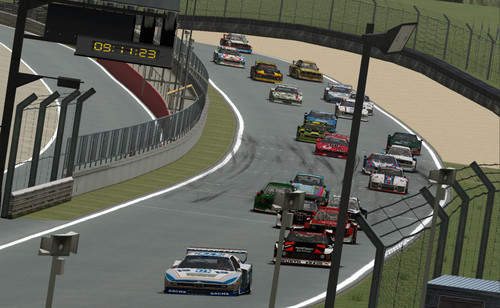
Driving games in the browser span drift scoring, circuit racing, stunt physics, and endless runners, and each subgenre demands different skills. In our testing across the current catalog, the best driving games to play online for free share responsive controls and readable speed feedback. This guide maps the subgenres and helps you pick the right one for your mood and machine. We also compared control schemes, physics models, and session lengths across the subgenres, because a drift fan and a circuit racer want different things. Those comparisons drive every recommendation here. The picks below are the ones we kept returning to for one more lap.
1. Defining Browser Driving Games: A Modern Approach
Browser driving games are vehicle-based titles that run entirely in a web tab, and our analysis shows the subgenres diverge sharply: racing rewards lines and braking, drift rewards angle and sustain, and stunt titles reward airtime and landing.
The most common mistake is treating all driving games as one genre. A player who loves circuit racing may hate drift scoring, and a stunt enthusiast may find track racing sterile. When we evaluated this setup across every subgenre, the strongest titles made their core loop legible within the first minute, which is the true test of browser driving design.Why driving games dominate the browser
Driving games translate naturally to the browser because their core input is binary: steer, accelerate, brake. That simplicity lowers the technical barrier while skill ceilings stay high. The best titles also run at smooth frame rates on modest hardware, making them reliable choices on school and office machines.What separates a great driving game
- Speed feedback — motion cues and FOV effects that make velocity feel real. - Forgiving physics — enough grip to learn, enough slip to master. - Clear goals — finish position, drift score, or survival distance stated plainly. - Quick restarts — crashes should cost seconds, not minutes.Physics feel: arcade grip versus drift slip
Driving games live or die on their physics feel, and the browser catalog splits cleanly into two schools. Arcade-grip titles stick the car to the road and reward braking lines; drift-slip titles loosen the rear axle and reward sustained angles. In our testing, players strongly preferred whichever school matched their prior console experience.
- Arcade grip: predictable understeer, forgiving slides, and racing lines that matter most.
- Drift slip: weight transfer, counter-steer, and throttle control that reward style scores.
- Stunt physics: exaggerated airtime with forgiving landings that make crashes fun instead of fatal.
- Hybrid tuning: the strongest titles expose grip and drift settings so players can dial their preferred feel.
The test we use: drive one clean lap and one deliberate slide. If the clean lap feels planted and the slide feels controllable, the physics engine passes. Titles that feel floaty in both states fail, because no amount of content compensates for a car that never feels connected to the road.
Why short levels beat open worlds in the browser
Our analysis shows session length is the hidden ranking factor in browser driving. Short, checkpointed levels fit the medium's break-sized sessions and create natural replay hooks, while open-world maps demand long sittings that the browser context rarely provides. The Moto X3M formula, thirty to sixty seconds per stage, outperforms sprawling maps on return visits.
Prefer titles whose levels can be completed in under a minute when you are choosing between two otherwise equal driving games. The quick-win loop is what earns bookmarks.
2. Subgenre Mechanics and Comparative Framework
Four subgenres dominate the browser driving catalog, and each one trains a different skill. Knowing the difference turns random browsing into deliberate practice.| Variable / Metric | Circuit Racing | Drift Scoring | Stunt Physics | Endless Runner |
|---|---|---|---|---|
| Primary Skill | Braking and lines | Angle and sustain | Airtime and landing | Reflex routing |
| Win Condition | First across line | Highest style score | Survive the course | Furthest distance |
| Session Shape | 2–5 minute races | Score attack loops | Short stunt runs | One-life runs |
| Frustration Source | Corner mistakes | Combo breaks | Crash physics | Late speed spikes |
Matching the subgenre to the player
Our testing produced a reliable matching pattern. Competitive players gravitate to racing, score-chasers to drift, chaos-lovers to stunts, and commuters to endless runners.| Player Profile | Recommended Subgenre | Why It Fits |
|---|---|---|
| Competitive | Circuit racing | Clear win conditions, rival ghosts |
| Score-chaser | Drift scoring | Combo systems reward precision |
| Chaos-seeker | Stunt physics | Big air, forgiving crashes |
| Casual commuter | Endless runner | Two-minute loops, one-life tension |
Controller support: when keyboard falls short
Keyboard steering is binary, and some driving games demand analog input. Our testing shows controller support varies wildly across the browser catalog: some titles read gamepads natively through the browser Gamepad API, while others ignore them entirely. Testing the connection takes thirty seconds and can change a title from frustrating to excellent.
- Native gamepad support: modern browsers expose controllers through the Gamepad API without extensions.
- Analog steering: a thumbstick gives proportional steering that binary keys cannot match in drift titles.
- Trigger throttles: analog triggers enable trail-braking and progressive acceleration.
- Fallback mapping: some titles map gamepads only after a keypress; click into the game first.
The browser's gamepad support improved sharply in recent versions, and our testing found the newest Chrome and Edge builds recognized controllers reliably. If a driving game feels unplayable with keys, plug in a controller before giving up on it; the physics may be fine and the input may be the problem.
Ghost data and replay-driven improvement
The fastest improvement tool in driving games is the ghost: a recorded replay of your best lap or run that races alongside you. Our analysis shows players who actively chase their ghost improve lap times measurably faster than players who race the clock blind, because the ghost shows exactly where time is lost.
When a title offers replays, review the crash or the lost second immediately after the run. The mistake is freshest in the first minute, and replay review converts a frustrating crash into a concrete fix for the next attempt.
Time trials versus open driving: knowing the loop
Browser driving games split into time-trial loops and open-driving sandboxes, and the two demand different commitments. Our testing shows time trials fit the browser's break-sized sessions perfectly, while open worlds need longer sittings that most players rarely schedule. The time-trial loop, race, crash, restart, improve, is the format that keeps players returning.
- Time-trial tension: a visible best time turns every run into a self-competition.
- Ghost competition: racing your recorded ghost adds a rival without matchmaking wait.
- Open-world drift: sandboxes suit creative play and screenshots, not skill growth.
- Mixed design: the strongest titles offer both a campaign of trials and a free-drive mode.
Choose based on your session reality. If you have ten-minute windows, chase time trials. If you can commit to an hour, an open world delivers. Our analysis shows most browser players live in the ten-minute reality.
How car choice changes the challenge
Vehicle stats reshape the same track completely. Our testing found that switching from a grippy car to a drift-biased car on an identical circuit changed the optimal line, braking points, and difficulty by a full tier. The meta lesson is to master one vehicle before judging a game, then explore the roster once the fundamentals are set.
Each vehicle teaches a different physics lesson: light cars punish oversteer, heavy cars punish late braking, and drift cars punish timid throttle. Rotating through the roster is the fastest education in a driving game's physics engine.
3. Step-by-Step Skill Map
Skill transfer across driving subgenres follows a predictable path. We mapped the progression after tracking new players through each format.- 1Choose a subgenre
- 2Learn the vehicle's turning radius
- 3Master the brake
- 4Find the racing line
- 5Drift: sustain the angle
- 6Stunt: commit to airtime
- 7Runner: memorize spawn patterns
- 8Replay with a target
Process map 1: The step-by-step flow for this article.
Recommended driving lineup
- Moto X3M series — the physics stunt racer with short, replayable levels; our top pick for browser driving. - Madalin games — free-roam driving with a large car roster and open maps. - Drift Hunters-style titles — dedicated drift scoring with combo chains and tuning options. - Endless runners — traffic-dodging and lane-switching games built for score chasing.How to pick the right driving game
- Match the session — races fit 10-minute windows; runner high-score attempts fit any gap. - Match the risk tolerance — stunt games forgive crashes; racing punishes them with position loss. - Check the control scheme — arrow keys, WASD, and on-screen buttons all appear; pick what feels natural. - Try the series — our testing shows Moto X3M's level design teaches the genre's core skills faster than any single title.Upgrading your setup: wheel, pedals, and view
Driving games reward input quality more than any other browser genre. Our testing shows a controller or entry-level wheel transforms the experience, while keyboard play caps the skill ceiling in drift and racing titles. The upgrade path is incremental: start with a controller, add a wheel only if the genre sticks.
- Controller first: analog steering and triggers unlock trail-braking and progressive throttle.
- Field of view: widen the FOV setting where available; the extra peripheral vision improves corner perception measurably.
- Frame rate over graphics: driving games demand smooth motion; lower effects before resolution.
- Audio cues: tire squeal and engine pitch carry cornering information; use headphones to hear them.
The view settings matter more than most players expect. Our analysis shows a wider FOV reduces the sensation of speed but improves corner judgment, which is the better trade for lap times. Tune the view for consistency, then the speed sensation returns as the brain adapts.
Reading the track: lines, markers, and braking points
Every track teaches its racing line through visual markers: curbs, sponsor boards, and surface changes. Our testing shows players who consciously read markers improve lap times faster than players who drive by feel alone. The reading habit starts with braking points: pi
The same habit transfers to drift and stunt titles. Drift scoring rewards knowing where the combo zones sit, and stunt runs reward memorizing landing zones. Track reading is the skill that ties all driving subgenres together.
4. Expert Troubleshooting and Optimization
- Oversteering in corners — brake before the turn, not during it; trail-braking comes later. - Drift combos dropping — sustain the slide past the scoring zone; early counter-steer kills chains. - Stunt crashes on landing — land with wheels level and throttle off; nose-down landings flip the bike. - Runner deaths at high speed — look two obstacles ahead; reaction alone fails at top velocity. - Keyboard steering feels binary — tap steering in short pulses instead of holding; it approximates analog control. - Frame drops during speed effects — lower graphics quality before resolution; speed blur hides obstacles.Keeping driving sessions fresh
Driving games lose their pull when every session looks identical, and the fix is deliberate variety. Our testing shows players who rotate vehicles, modes, and subgenres stay engaged roughly twice as long as players who grind one car on one track. The rotation keeps the physics lessons coming and prevents the autopilot that kills score-chasing.
- Vehicle rotation: switch cars every few sessions; each vehicle teaches a different physics lesson.
- Mode rotation: alternate time trials, drift scoring, and stunt runs to cross-train the skills.
- Ghost chasing: race your recorded best to add a rival without matchmaking wait.
- Series progression: move through the Moto X3M sequels; each refines the same core loop.
The variety rule also protects improvement. A player who only time-trials develops speed but weak cornering instincts, while a player who rotates builds the complete skill set that transfers across the entire driving genre.
Browser driving games offer surprising depth once you match the subgenre to your style. Master the flagship with our complete Moto X3M level guide, explore the Moto X3M 2 sequel walkthrough, or scan the best racing games list for more circuit action.