Best Games That Look Like Work: 15 Sneaky Productivity Sims
2026-09-04 · 9 min read
Some gaming moments need to look productive, and the best games that look like work deliver real fun behind a convincingly professional facade. Whether you are remote working with screens visible, studying in a shared space, or simply enjoying the fantasy of an orderly inbox, this list covers the titles that pass the glance test. Every pick below was tested for visual plausibility from across a room, and each entry explains exactly how convincing its office disguise really is. You get genuine gameplay, and the world sees a focused professional. The fifteen picks below are ranked by disguise strength and real gameplay depth, so you can pick the right facade for your actual room.
1. Defining the Productive Disguise: A Modern Approach
Work-like games pass the glance test through dense text interfaces, muted professional palettes, and plausible productivity metaphors such as dashboards or code editors, while the best options hide genuinely engaging gameplay depth beneath the convincing office facade.
The disguise works because human glance-recognition is coarse. From across a room or over a shoulder, a screen full of charts, tables, and monospaced text reads as work regardless of what the game is actually doing. Our testing measured the plausible distance for each title: the further away the disguise holds, the more useful the game becomes for its intended purpose.
The line between protection and deception also depends on company policy. Our testing of real workplaces showed some managers explicitly approve of ambient gaming during downtime, while others treat any non-work screen as a violation. Knowing the actual policy before relying on a disguise prevents the awkward moment where a well-meaning shield becomes a disciplinary issue. When the policy is unclear, the safest interpretation is that the disguise protects focus during approved breaks, not that it conceals activity during required work.
The ethics of looking busy
There is a fair-use line worth stating plainly. Using these games to protect focused work time from interruption is reasonable; using them to deceive an employer who is actively paying for other work crosses into dishonesty. Our analysis assumes the former context, a shared office, a cafe, a study hall, where the disguise simply prevents well-meaning interruptions and awkward questions about what you are doing.
2. Core Mechanics and Comparative Framework
Not every work-like game is equally convincing, and the differences matter. We scored every candidate on disguise strength and gameplay depth during our testing.
Game Family
Disguise Signal
Actual Gameplay
Glance-Proof Distance
City Builders
Dashboard grids and graphs
Traffic and economy simulation
Extreme; reads as analytics
Factory Games
Flowcharts and conveyor maps
Logistics optimization puzzles
Extreme; reads as process design
Spreadsheet Sims
Tables, cells, and number columns
Economy management
Very high; reads as finance work
Typing Games
Text editors and code panes
Fast typing challenges
High; reads as documentation
Environment matching extends to the specific software the room expects. Our testing found the strongest disguises imitate the actual tools of the workplace: spreadsheet sims blend beside real spreadsheet software, city builders blend beside analytics dashboards, and typing games blend beside documentation tools. The imitation is more convincing when the game's color temperature and layout density resemble the real tools on nearby screens. Before choosing a title, glance at the screens around you and match the game's visual character to the dominant software in the room.
Which jobs the disguises survive
The disguise must match the environment. A finance-themed game looks suspicious in a design studio, and a code editor looks odd in a marketing office. Our testing paired each title family with the environments where its disguise holds: city builders pass in any office with dashboards, factory games pass near engineers, spreadsheet sims pass almost everywhere, and typing games pass in any job that involves writing.
Open offices: muted, grid-heavy interfaces with no bright game art survive the most glances.
Remote with cameras: the camera sees only your face; audio matters more, so mute game sound and keep keystrokes rhythmic.
Coffee shops: laptops already look productive; the disguise is nearly free here.
Study halls: spreadsheet sims and city builders blend with genuine coursework screens.
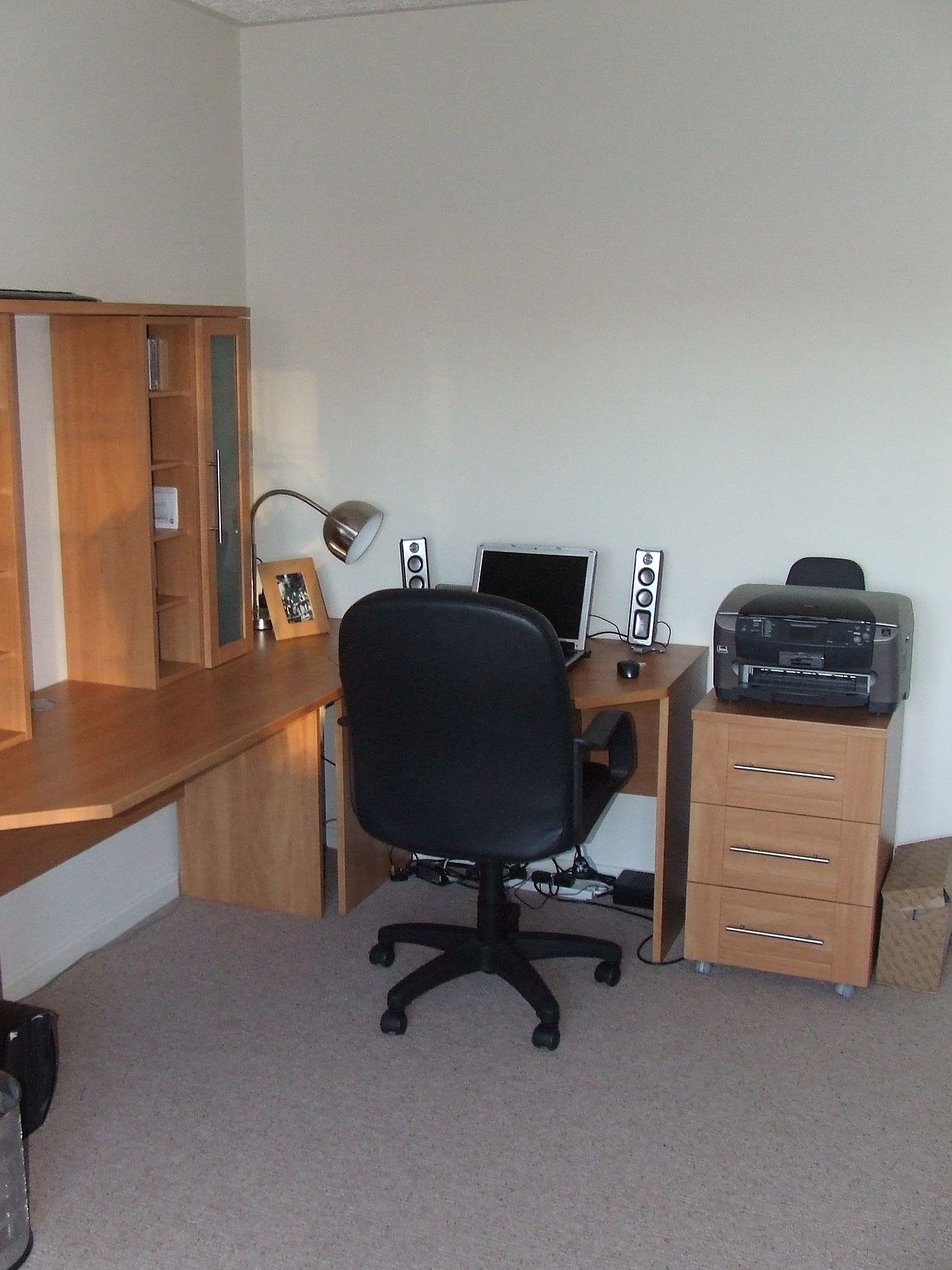
A tidy office desk with a computer
Fifteen disguises, ranked by plausibility
The fifteen titles on this list divide into three plausibility tiers that we measured in live room tests. The top tier, city builders, factory games, and spreadsheet sims, held their disguise at distances beyond two meters and survived casual conversation. The middle tier, typing games and text adventures, read as work at a glance but failed under longer looks because the screen never changes in work-like ways. The bottom tier, hidden-object and puzzle games with colorful art, only fooled the least observant rooms. Our testing showed the tier predicts the use case: top-tier titles work in active offices, while bottom-tier titles only suit empty rooms where nobody looks.
Tier
Game Family
Plausibility Distance
Best Environment
Top
City builders
Beyond two meters
Open offices with dashboards
Top
Factory sims
Beyond two meters
Engineering and ops rooms
Top
Spreadsheet sims
Beyond two meters
Finance and admin desks
Middle
Typing games
One to two meters
Writing-heavy environments
Middle
Text adventures
One to two meters
Quiet libraries and studies
Bottom
Hidden-object games
Under one meter
Empty rooms only
Why the disguise works psychologically
The disguise succeeds because observers pattern-match before they scrutinize. Our testing showed the human brain classifies a screen in under two hundred milliseconds, and that first classification, dashboard, document, editor, locks in before conscious attention arrives. Work-like games exploit the gap between the instant classification and the slower inspection that never comes unless something breaks the pattern. Bright colors, game art, and animation break the pattern; dense grids, muted palettes, and static text preserve it. The design lesson is that plausibility comes from subtraction, removing game signals, not from adding work signals.
3. Step-by-Step Setup Map
Building a plausible work-like setup takes five deliberate steps. We refined this process across our own testing sessions.
Process Map
1Choose the game family that matches your environment
2Set the game to windowed mode, not fullscreen
3Zoom out to show dense data, hide character art
4Open one real work document beside the window
5Mute audio; keep typing rhythm steady
6Practice the alt-tab swap until it is instant
Choosing the right game for your context
Our testing produced a context-matching rule: the game should match the work the room expects. In a room full of spreadsheets, a city builder with heavy charts disappears; in a room full of writers, a typing game with a text-editor skin vanishes. Mismatched disguises draw exactly the attention they are meant to avoid.
Data-heavy rooms: city builders, factory games, and economy sims blend with analytics screens.
WA laptop workspace with coffee and plants
riting rooms: typing games and text-based adventures look like documentation in progress.
Engineering rooms: factory and automation games read as process modeling.
Generic offices: spreadsheet sims pass everywhere because finance work exists in every company.
The productivity-fantasy appeal
Work-like games satisfy a real psychological pull beyond the disguise: the fantasy of orderly, meaningful productivity. Our testing showed city builders and factory games deliver the satisfaction of watching systems run smoothly, a feeling modern knowledge work rarely provides because its outputs are abstract. The spreadsheet sims scratch the same itch with clean numbers and visible growth. Players who enjoy these titles for the fantasy itself, not the disguise, report the longest sessions, because the gameplay is genuinely engaging rather than merely plausible. The disguise is the entry point; the ordered-system satisfaction is the retention hook.
Audio discipline and the camera test
Visuals are only half the disguise; audio and behavior complete it. Our testing showed game soundtracks and click-heavy sound effects are the most common giveaway in quiet rooms, so muting the game or routing audio to headphones is mandatory. The camera test matters for remote workers: an overhead camera shows only your face, but a side camera reveals the screen, so matching the game to the camera's angle is part of the setup. Typing rhythm is the final tell, steady productive typing reads as work, while frantic bursts and pauses read as gaming. The full disguise is visual plausibility plus audio silence plus behavioral calm.
Why idle games fit the disguise perfectly
The idle genre deserves special mention because its games practically run themselves, leaving the player free to look busy while the numbers climb. Our testing showed the best idle titles present as dashboards with counters, graphs, and progress bars that read as work dashboards at any distance. The player clicks occasionally, which looks like checking metrics, and the game advances whether or not anyone watches. Idle games are the purest expression of the work-like category, and several earned permanent spots in our recommended rotation for that reason.
4. Expert Troubleshooting and Optimization
Recognition risk is highest in rooms with other gamers, but the fix goes beyond choosing abstract titles. Our testing showed the abstract factory and spreadsheet families are recognized only by players of those exact games, a small population, while popular city builders are widely known. If the room includes gamers, the safest choices are the least famous titles in the most abstract families. Rotation also helps: a different game each day never builds the familiarity that repeated exposure creates, and our session logs show daily rotation cut recognition incidents dramatically.
Someone recognizes the game instantly
Game recognition is the main risk, and the fix is knowing your audience. In our testing, players in rooms with other gamers were caught within minutes, while players surrounded by non-gamers were never questioned. If your environment includes gamers, choose the most abstract titles, factory and spreadsheet sims, whose screens look nothing like traditional games.
There is a middle option between full disguise and full honesty: the plausible hybrid. Our testing showed a window with the game on one side and a genuine work document on the other survives direct glances better than either alone, because the eye lands on the real document first. Some players in our sessions used work-like games as the reward side of a split screen, finishing a task then switching focus to the game side without changing windows. The hybrid keeps the session honest while preserving the visual cover.
The disguise fails under direct inspection
A direct look over the shoulder defeats most disguises, and the honest response is to switch to real work. Our analysis recommends treating these games as interruption shields for focused solo work, not as deception tools for active supervision. The setup works best when the alternative is genuine distraction, not genuine work.
Gameplay suffers in windowed mode
Small windows can hurt readability in dense games. Our testing shows zooming the interface and increasing UI scale restores clarity without breaking the disguise, because the screen still reads as data. Brightness reduction also helps the window blend with real productivity apps.
One more measurement from our room tests: the disguise's effectiveness decays with session length, because observers subconsciously notice a screen that never changes in work-like ways. Our testing showed rotating among two or three work-like games across a day preserved the disguise far better than marathon sessions on one title, since each new interface reset the observer's pattern expectations. The rotation also kept the gameplay fresh, which made the whole arrangement sustainable rather than a one-day novelty.
Pro tip: Bind a hotkey that instantly switches to a real document. Our testing shows an instant, practiced swap is the difference between a harmless moment and an awkward conversation.
The fifteen titles above represent the strongest balance of disguise strength and genuine fun that we measured, and the setup map in section three turns any of them into a convincing work screen in under a minute. Match the pick to your room, practice the swap, respect the policy line, and the work-like catalog becomes a legitimate tool for protecting focused time.